 Optimizing pump to reduce vortex flow
Problem statement
Paul Brooks is researching the feasibility of a liquid sodium-cooled nuclear reactor. He has developed multiple test setups to validate and explore fluid flow interactions at different temperatures within a sodium cooling system. These experiments require uninterrupted, bubble-free circulation, but the system is forced to shut down when increased impeller speeds cause air from the reservoir to enter the loop. This entrainment not only interrupts operation but also risks damaging the impeller, requiring costly replacement. The sealed nature of the sodium system severely limits visibility and access to the reservoir, making it nearly impossible to identify the driving factors behind the entrainment.
In earlier, smaller systems, Paul used smaller impellers and shafts. When vortexing and cavitation occurred in those reservoirs, sheet-metal pool stabilizers were fabricated and proved sufficient to disrupt vortex formation. In the current setup, however, the larger impeller and corresponding increase in shaft diameter have rendered that approach ineffective. While other solutions exist to disrupt vortex formation, they are typically designed for low-speed tank draining [1] or for reducing turbulence in vertical pumps to improve flow measurements [2]. These strategies do not translate to Paul’s cantilever pump configuration.
As a result, he is forced to operate the system at reduced rpm, preventing him from simulating the conditions necessary to collect valid data which delays his client’s deadline. This not only affects Paul’s research timeline but also slows progress toward safer and more efficient cooling technologies that his faculty advisors and industry partners expect. To address this limitation, a dedicated test setup is needed-one that provides clear visibility into the reservoir tank and allows observation of how and where air becomes entrained. Such a setup would enable evaluation of potential pool stabilizer geometries, supporting efficient iteration and ultimately allowing the pump system to operate across its full design range safely and as quickly as possible.
[1]’ANTI VORTEX FITTINGS | JD Skiles,’ JD Skiles, 2017. https://www.jdskiles.com/anti-vortex-fittings (accessed Sep. 21, 2025).
[2]’Flow Conditioning Basket – Flow Optimizers,’ Flow Optimizers, Aug. 18, 2025. https://flowoptimizers.com/flow-conditioning-baskets/ (accessed Sep. 23, 2025).
Team members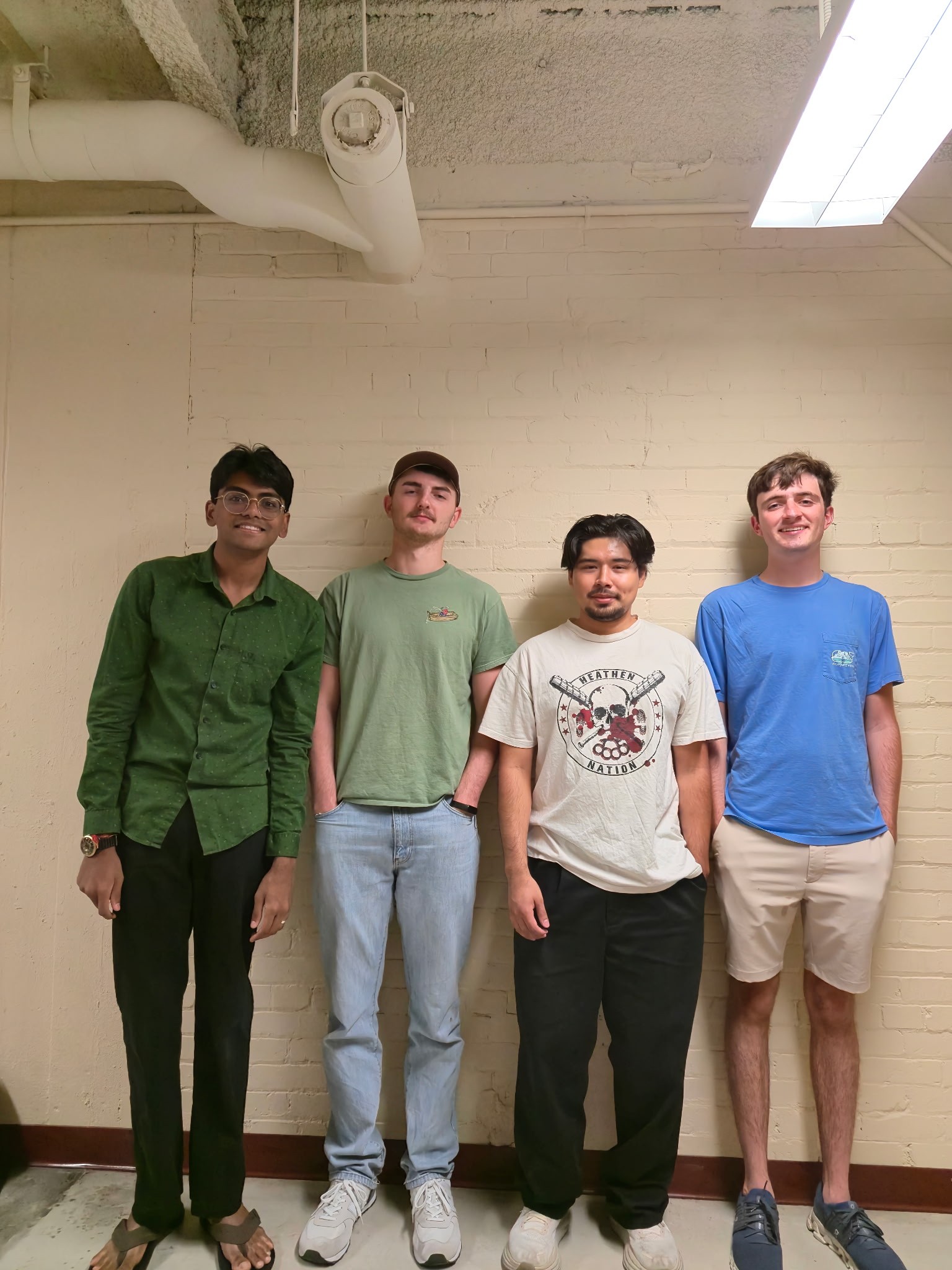
Andrew Schaefer – facilitator
Clayton Coughlin – admin
Jason German Fernandez – accountant
Sujay Shanmugam – communicator
Client
Mark Anderson
UW – Mechanical Engineering