 Smart Textile
Problem statement
Each year, millions of people experience preventable injuries and complications from tendon overloading, fatigue, and chronic conditions such as Achilles tendinopathy. These injuries disrupt athletic performance, delay rehabilitation, and in severe cases lead to long-term disability. Current tendon monitoring technologies are often limited to laboratory settings or cost more than six hundred dollars per sensor, which makes them impractical for everyday use. Without accessible tools for continuous monitoring, athletes risk pushing their bodies beyond safe thresholds and patients face a high chance of re-injury during rehabilitation.
A solution is needed that can measure tendon strain in real time, outside of the lab, and at a cost that allows for broad use. Recent research at the University of Wisconsin-Madison, including Vimotis’ tendon percussion tensiometer system and new soft PDMS-CNT-graphene composite sensors, highlights the potential for replacing rigid, high-cost devices with lightweight and wearable alternatives. These soft sensors can conform to the skin, detect small displacements on the order of microns, and operate across the frequency range needed for tendon wave propagation. By combining these technologies, the cost of monitoring could be reduced by more than ninety percent while improving comfort and usability.
Some may argue that accelerometers are already sufficient for tendon monitoring. However, accelerometers are rigid, expensive, and difficult to integrate into daily life. By validating PDMS composite sensors at the frequency and amplitude ranges that matter for tendon loading, our project aims to provide a more practical and affordable option.
The vision is a compression sleeve or sock that not only tracks steps but also warns when the Achilles tendon is approaching dangerous strain levels. Unlike existing systems, such a device would be inexpensive, reusable, and designed for daily wear. This would give athletes a way to prevent injuries before they occur, provide clinicians with valuable rehabilitation data, and offer patients a more accessible form of preventative care. Grounded in published work in biomechanics, materials science, and wearable elastography, this project seeks to close the gap between precise laboratory measurements and everyday usability.
Team members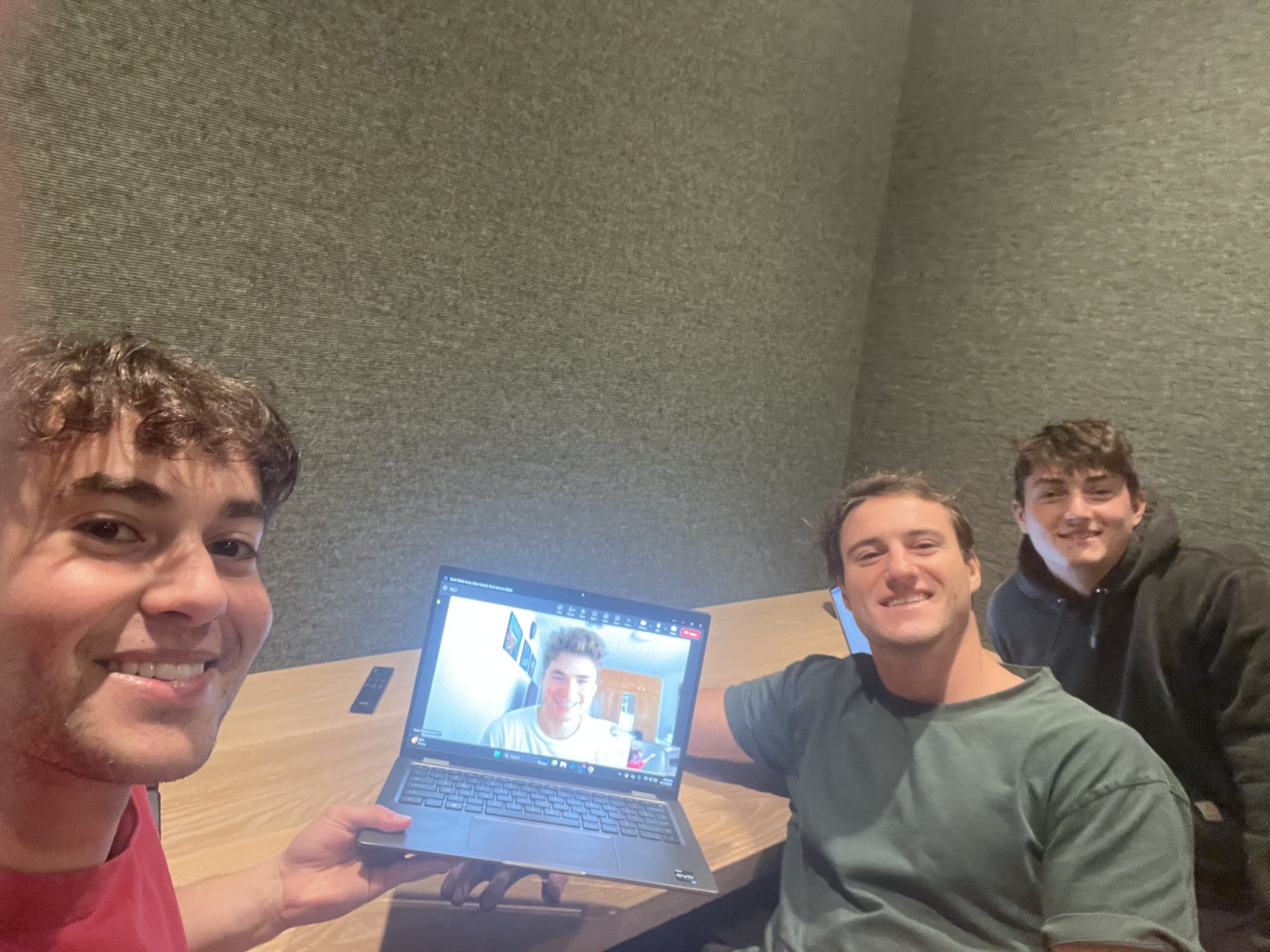
Gavin Gross – accountant
Tamir Hanono-Michli – communicator
Jake Fern – admin
Owen Garrett – accountant
Client
Brady Adcock
Impulse Wellness