 Compact laser-based sensor for measuring liquid fuel properties

Problem statement
Imagine being a military pilot running low on fuel, only to discover that the base you’ve landed at doesn’t have the specialized jet fuel your aircraft requires. These situations can leave pilots stranded or force them to operate under reduced performance. While some aircraft have tunable engines capable of adjusting to alternative fuel types, these systems require accurate knowledge of the fuel mixture to optimize performance. Current detectors exist but are not designed for the tough constraints of a military environment. For example, the Grabner Miniscan IR Vision can measure octane levels [1], but at 10.5 x 15.4 x 11 inch, it is far too large to integrate into an aircraft fuel system. Even smaller sensors like the LOCT-A10, have narrow operating temperature ranges [2], making them unusable in the extreme conditions of flight.
To address this gap, a research team is developing a compact, laser-based sensor capable of detecting liquid fuel properties. However, this sensor requires a specialized housing to maintain stable operating temperatures and must be reduced in size to be practical for real world application. In addition, large amounts of data are needed to test and train the sensor across a variety of fuel combinations. One research team has already collected this data, but it is only relevant for Attenuated Total Reflectance (ATR) fuel flow cells. A current, larger laser-based sensor uses a window pass-through flow cell. Rather than recollect this data, the team must also select and adapt a design using an ATR flow cell. By developing a smaller, temperature-controlled housing and with an updated fuel flow cell, our project will directly support the sensor’s advancement. Ultimately, this will improve aircraft efficiency, reduce the risk of performance loss in critical situations, and give pilots the flexibility to use whatever fuel is available to them at the time.
Team members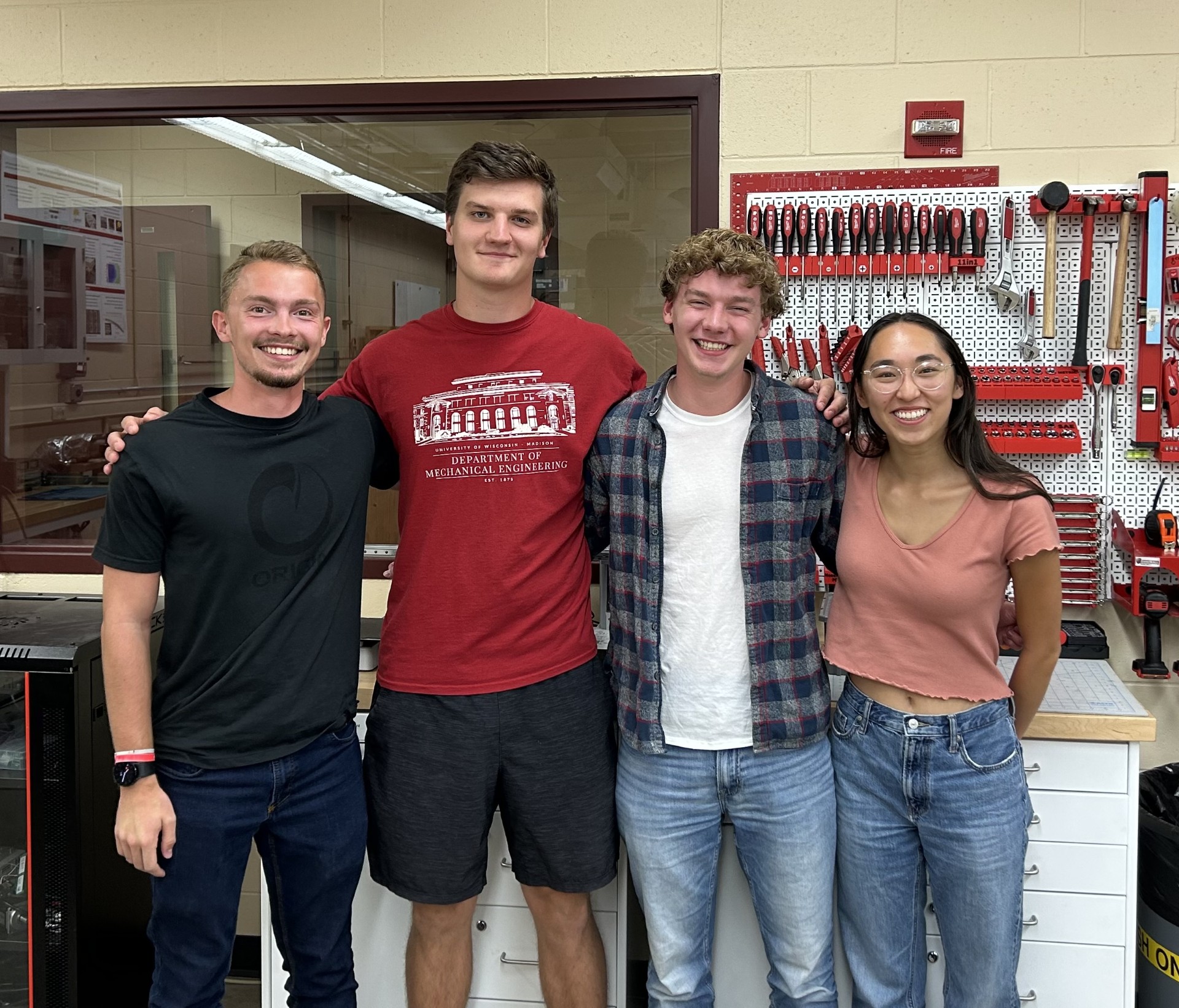
Devin Digman – admin
Jabin Friberg – communicator
Jacob Goldthorpe – accountant
Maya Lee – facilitator
Client
Scott Sanders
UW – Mechanical Engineering