Bucky’s Power Maxxers
Modifications to JetCat P100 for Electrical Power Generation

Problem statement
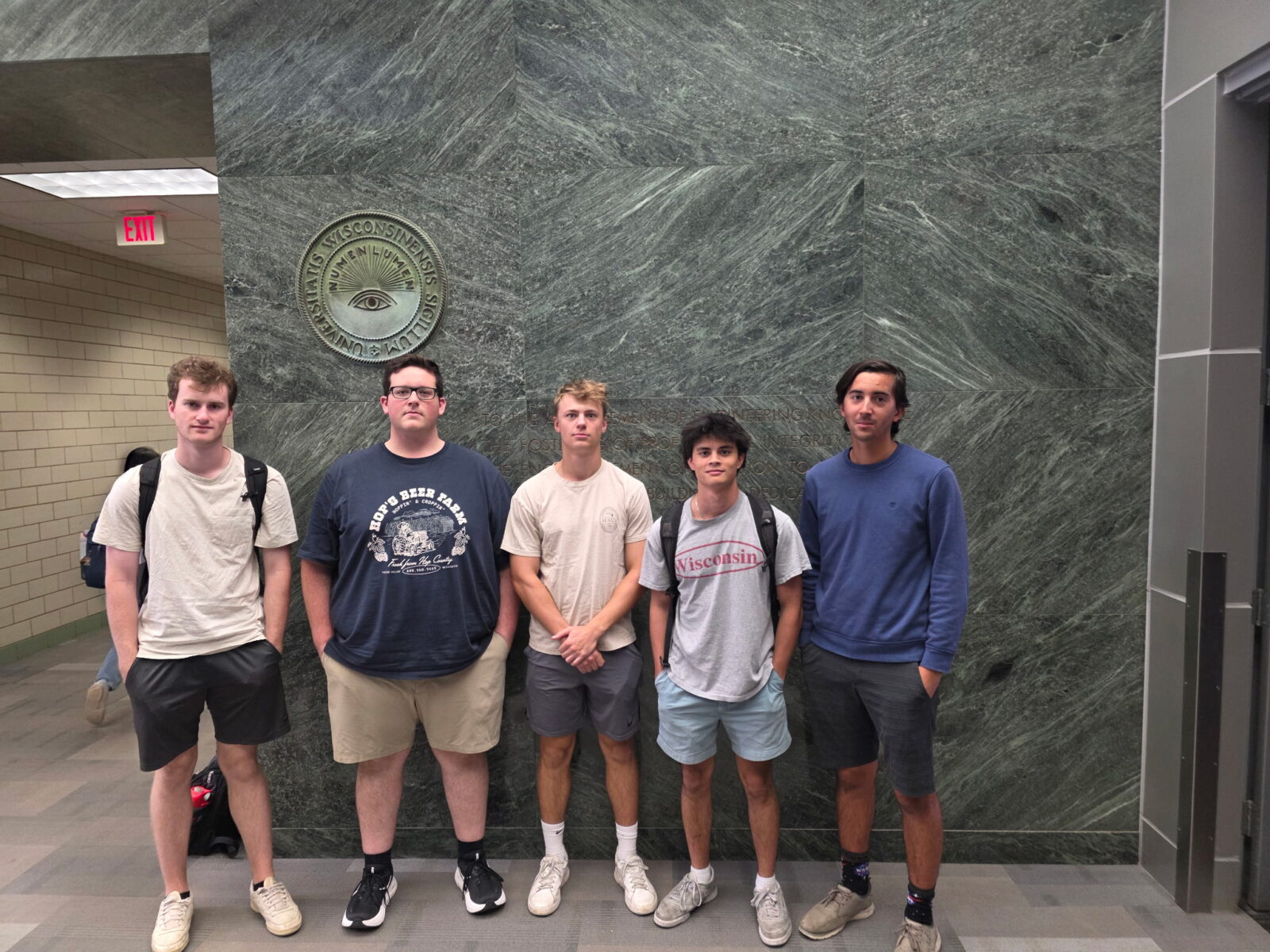
The Aerospace Propulsion Outreach Program (APOP) challenges our five-student University of Wisconsin–Madison team to generate 1,000 W of electrical power from a JetCat P100 turbine engine. Exhaust gas power is generated from the running jet engine, but leaves in the form of heat and flow, not electricity. Conversion losses and changes to engine operation limit how much electricity a complete system can deliver. Without a working prototype and measured performance, APOP cannot determine whether our proposed approach meets the competition’s power goal. APOP, our faculty advisor, and our TA are committing resources based on our engineering judgment, and a successful result reflects well on the program and the university as much as on our own team. Future teams will stand next to an engine that runs at over 700°C and speeds exceeding 100,000 RPM, so our documented system and procedures must keep future students safe. These future APOP teams will inherit our documentation so that they can learn from our mistakes in our design and testing. Some might argue that we should simply adopt an already working design. However, a University of Oklahoma APOP project produced 500 W of electrical power, only half of the required power, so any past ideas must be fully tested before integration. Using another team’s solution limits our potential success and ability to find novel solutions. APOP needs a solution that meets the requirements in terms of power generation, weight, fuel consumption, reliability, and safe operation. A successful prototype proves the ability to turn jet engine power into usable electrical power, and good documentation provides a foundation for future teams.