Marine Energy Collegiate Competition (MECC)
Finding solutions to problems facing the marine energy industry.
Problem statement
Current Great Lakes marine energy systems suffer from high levelized cost of energy exceeding $0.50/kWh, driven by high capital costs of $5,000-$8,000/kW, and structural failures due to harsh freshwater environments. Existing freshwater hydrokinetic and wave devices in the Midwest region have capacity factors as low as 20% and offshore floating wind turbines are unable to withstand freezing temperatures, leaving almost 415 GW untapped [1]. While counterarguments suggest that severe winter conditions cause operational challenges for offshore systems, current infrastructure relies exclusively on transmission cables that leave microgrids such as Beaver Island vulnerable to power outages during extreme weather events [2]. To bridge this gap, our team will design and evaluate a marine energy system adapted to the Midwest region’s waterways that balances deployment costs against freshwater survivability and optimizes power generation to advance the region’s capabilities and provide renewable energy to isolated rural communities. Sources: [1] U.S. Department of Energy Water Power Technologies Office, “Water Power Technologies Office Multi-Year Program Plan,” U.S. Department of Energy. [Online]. Available: https://www.energy.gov/cmei/water/multi-year-program-plan. [Accessed: Sep. 24, 2026]. [2] “Experimental bathtub: The remote lake island trying wave power to boost energy security,” The Guardian, Jul. 9, 2026. [Online]. Available: https://www.theguardian.com/environment/2026/jul/09/remote-island-wave-power-energy-security-beaver-island-lake-michigan. [Accessed: Sep. 24, 2026].
Team members

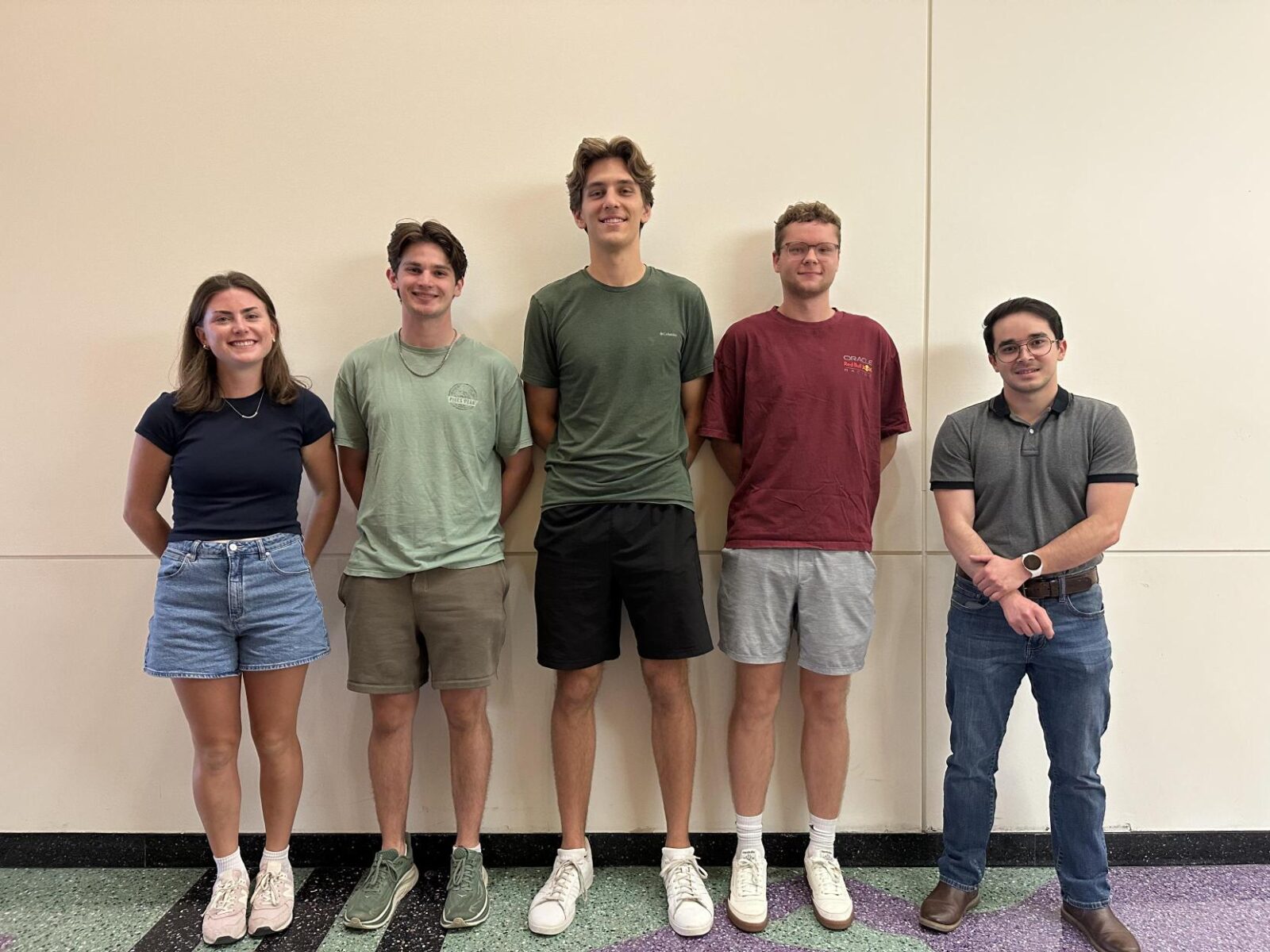
Douglas Peroutka – accountant
Emmanuel Martinez – admin
Ethan Arterburn
Isaac Thelen – communicator
Lily Margoshes – facilitator
Client
Lily Margoshes
UW – Mechanical Engineering