Atomic Badgers
Atomic Layer Deposition Reactor Design

Problem statement
Imagine needing precise, expensive equipment to perform research in your lab, but knowing that any off-the-shelf option won’t meet all your requirements. Either it won’t be the right size for what you’re doing, or it won’t have the data acquisition capabilities you’re looking for — either way the price is likely to be far out of your budget. That’s the problem the Kazyak Lab is facing when looking for a new atomic layer deposition (ALD) reactor. Researchers in the lab need an ALD system to develop energy storage devices and deposit protective layers and bifunctional catalysts for batteries, and they need it to be customizable, cost effective, and include advanced features such as integrated diagnostic capabilities [1]. These capabilities are crucial to the lab’s work on non-combustible zinc-air batteries as part of a national push to develop new battery systems with the potential to support both small electronic devices and larger energy-storage applications [2]. Since zinc-air batteries are non-flammable, they are inherently safer than existing solutions, potentially improving health and safety for millions. However, challenges with rechargeability, durability, and air electrode performance still limit their broader use. Improving these batteries could benefit consumers, battery manufacturers, and energy-storage developers worldwide. According to professor Kazyak, the lab’s existing systems do not have everything they are now looking for, including a modular design, a custom user interface, and the ability to perform plasma-enhanced ALD. The desired results could be achieved by commercially available systems, but the cost would be much greater than the budget set aside for this project. Commercial research scale ALD systems can cost several hundred thousand dollars; for example, Alabama A&M University awarded a $376,885 contract for a Kurt J. Lesker ALD-150LX system [3]. This high up-front cost strengthens the need for a lower-cost, customizable system that can be designed specifically around the Kazyak Lab’s research requirements and modified as those needs change. [1] “Kazyak Lab,” Kazyak Lab. Accessed: Sep. 16, 2026. [Online]. Available: https://kazyak.engr.wisc.edu/ [2] F. Santos, A. Urbina, J. Abad, R. López, C. Toledo, and A. J. Fernández Romero, “Environmental and economical assessment for a sustainable Zn/air battery,” Chemosphere, vol. 250, p. 126273, Jul. 2020, doi: 10.1016/j.chemosphere.2020.126273. [3] “Atomic Layer Deposition System for Electrical Engineering and Computer Science Department Bid.” Alabama A&M University, Dec. 12, 2017. Accessed: Sep. 22, 2026. [Online]. Available: https://vrapp.vendorregistry.com/Bids/View/DownloadBidFile?bidId=66ffcb4c-dcc7-4b03-ad2c-46e44f9b8aa4&fileName=Bid%20No.%202K18-05B%20-%20Kurt%20Lesker%20Mutually%20Executed.pdf
Team members

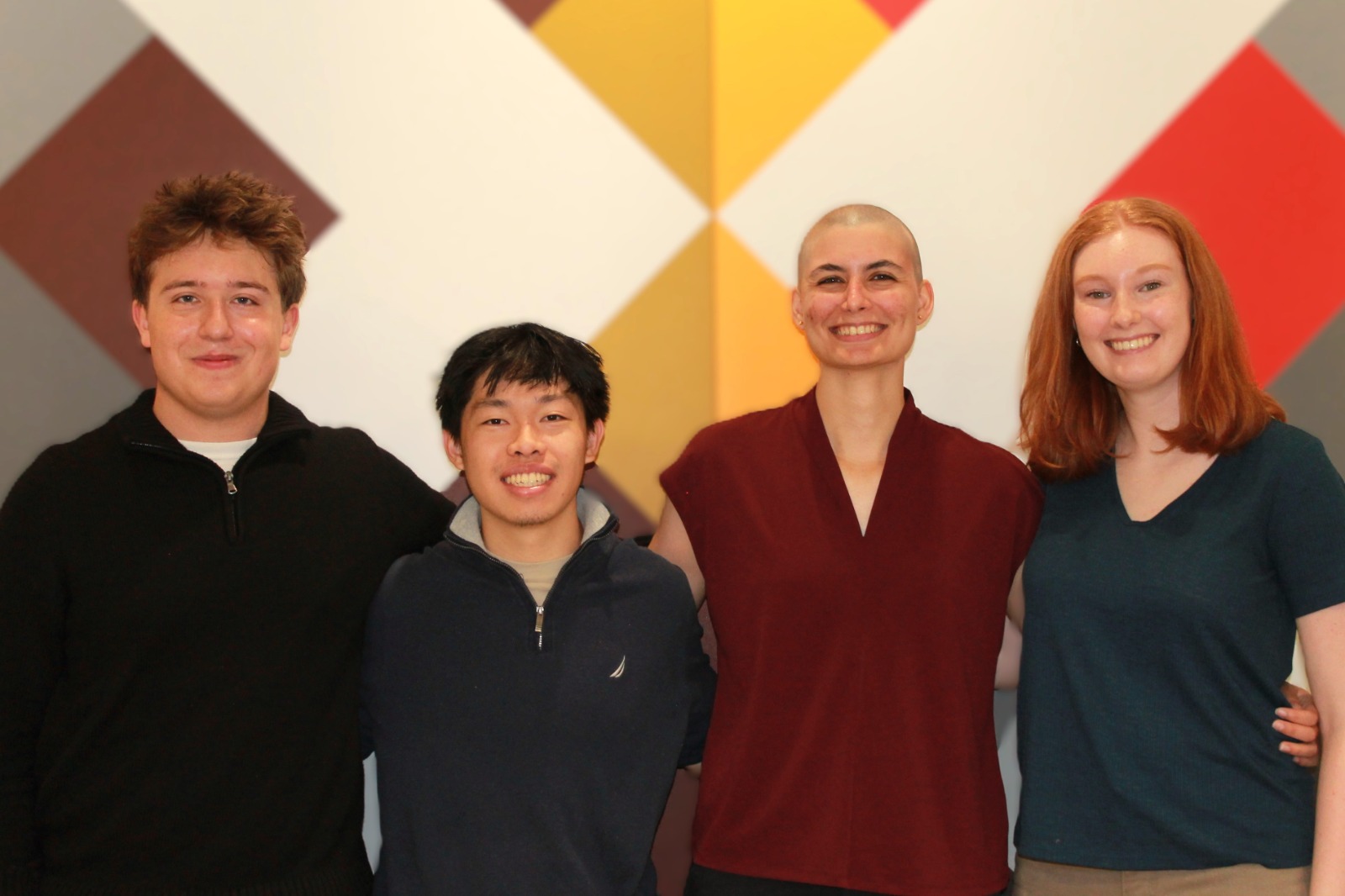
Allison Martin – admin
Carly Schindler – communicator
Henry Kwiatkowski – accountant
Lance Luong – facilitator
Client
Eric Kazyak
UW – Mechanical Engineering