Generator Group
Wind Turbine Generator

Problem statement
After 2024 officially became the hottest year in recorded history, acceptance and need for outreach in communities regarding zero-emission energy has reached an all-time high. Our client, the UW–Madison WiscWind team, is facing this issue head-on. The group competes yearly in the U.S. Department of Energy’s Collegiate Wind Competition, creating a physical model of a small-scale wind turbine that achieves a high electromechanical efficiency, while keeping development costs below $500 and manufacturing methods practical. It is important that we thoroughly consider the assembly method, as “manufacturing of wind turbines primarily relies on manual processes,” which will govern the complexity of our generator design [1]. The goal for the Generator Group is therefore to create a small-scale wind turbine generator which outputs at least 50 watts of power when subject to a variety of wind speeds, with a large focus on low cut-in speeds and a minimal cogging torque, as well as the manufacturing process. Overall, the Generator Group will target different overlapping coil winding methods and magnet orientation in the rotor in order to achieve a higher efficiency, while smoothing generator function at low wind speeds. [1] A. A. Malik and T. Masood, “Adaptive human–robot collaboration in wind turbine manufacturing using digital twins,” Sci. Rep., vol. 16, no. 1, 2026, doi: 10.1038/s41598-026-40576-6.
Team members

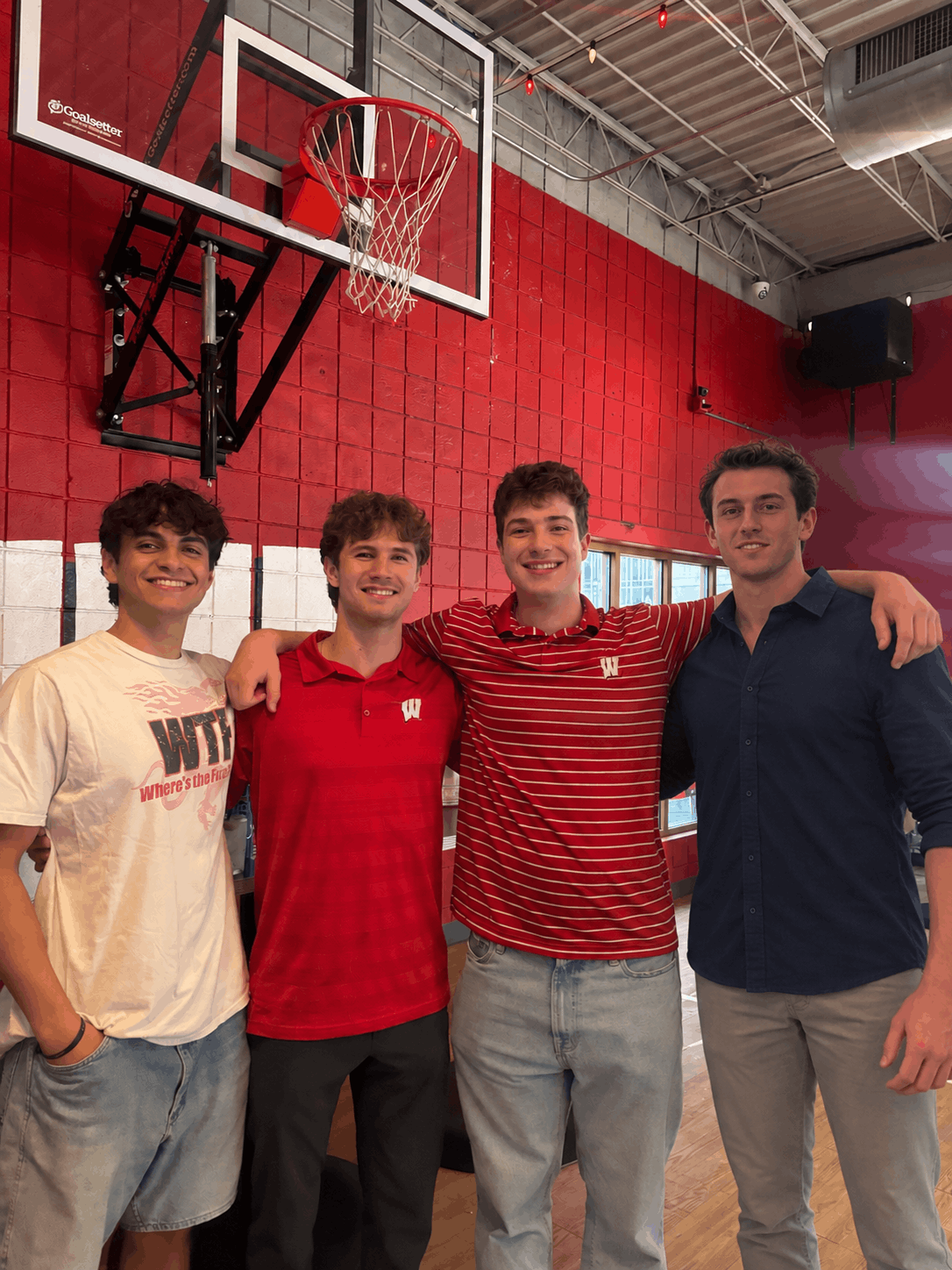
Benjamin Hudson – communicator
Holden Smith – accountant
Ryan Boyes – admin
Shaan Mehta – facilitator
Client
Andrew Hensal
UW – Electrical & Computer Engineering